Audio excerpt
Alfred describes the help he kept seeking—and the compassion he found for the children pressured to testify.
Read excerpt →A Maryland podcast hosted by Matt Rhine
Audio interview · Episode 23
Alfred Chestnut speaks with Matt Rhine about 36 years wrongfully imprisoned, the path to exoneration, and the work of rebuilding a life.
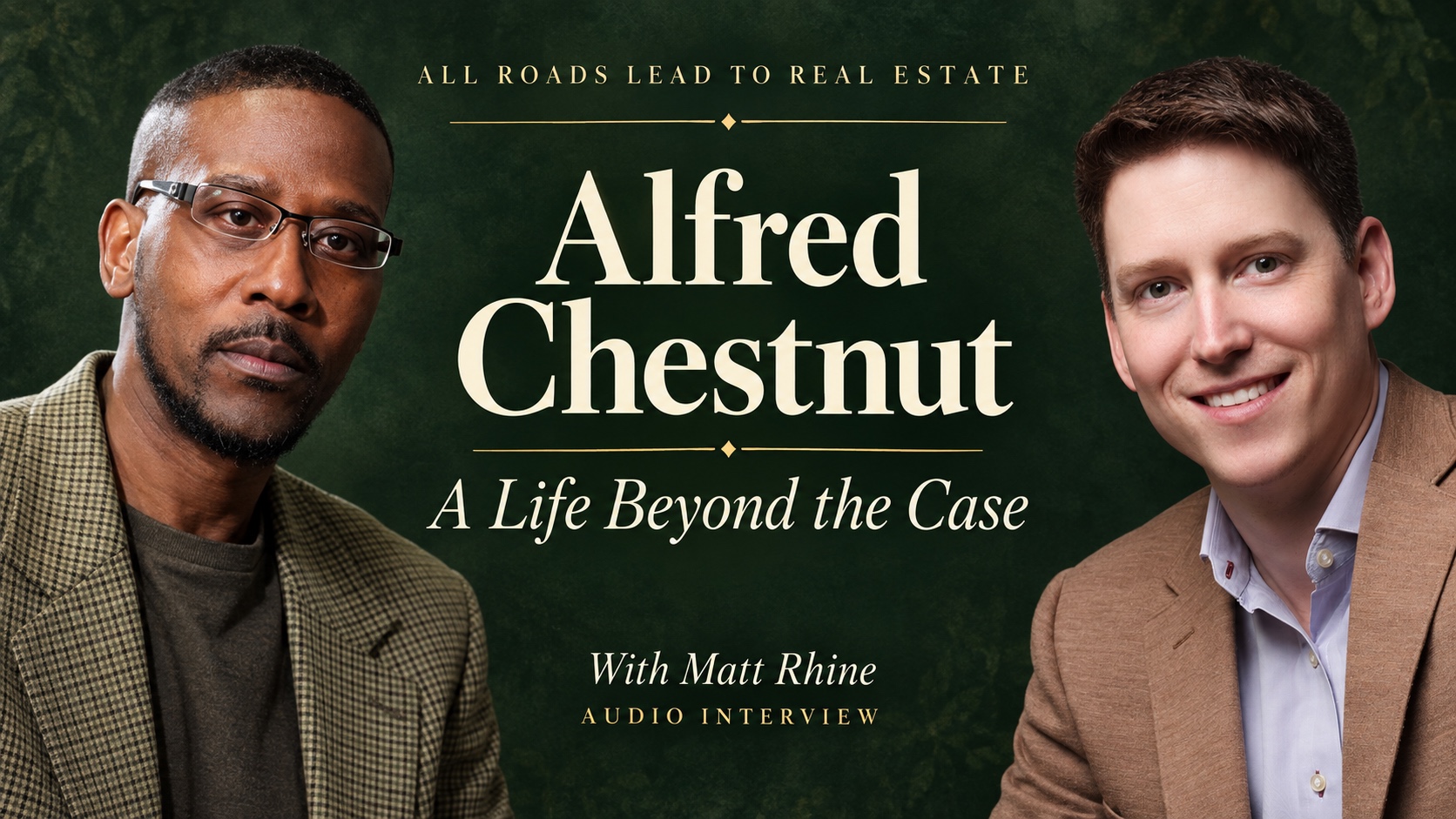
Audio interview
Member of the Harlem Park Three, in conversation with host Matt Rhine.
Press play to listen, or use the timed questions below.
The Harlem Park Three · Exonerated in 2019
Audio excerpt
Alfred describes the help he kept seeking—and the compassion he found for the children pressured to testify.
Read excerpt →Alfred Chestnut was sixteen when he, Andrew Stewart, and Ransom Watkins were arrested after the 1983 killing of their friend, fourteen-year-old DeWitt Duckett, at Baltimore’s Harlem Park Junior High School. The three teenagers maintained their innocence. Convicted in 1984, each spent 36 years in prison. Their experience became known as the case of the Harlem Park Three.
A joint reinvestigation by the Baltimore City State’s Attorney’s Conviction Integrity Unit and innocence advocates established that the three men did not commit the crime. Four witnesses recanted their testimony, saying they had been pressured to change their accounts. On November 25, 2019, their convictions were vacated and all charges dismissed.
In this conversation with Matt Rhine, Alfred describes his childhood in Baltimore, the earliest questioning, and the persistence it took to keep seeking legal help. He speaks about the witnesses as children who were also caught in the case, about being treated without dignity in prison, and about ordinary ways he tried to help others.
Exoneration did not give back those decades or erase their effects. Alfred talks about returning home, the unexpected ways trauma can surface, and the family and young daughter he was building a future for at the time of this conversation. His story is not only about what was taken from him; it is also about his agency, his care for others, and the life he was beginning to rebuild.
Case history: Mid-Atlantic Innocence Project case history ↗
Listen on Apple Podcasts, or follow the show on Spotify.
Before the case, there was a Baltimore childhood: family, cousins across the street, and children finding ways to play. Alfred Chestnut was sixteen when his life was interrupted by a wrongful prosecution. He, Andrew Stewart and Ransom Watkins each spent 36 years in prison for the killing of fourteen-year-old DeWitt Duckett, a crime they did not commit.
In this conversation, Alfred describes the letters he kept writing when help seemed out of reach, his compassion for the children pressured to testify, and the small acts of care that mattered behind prison walls. Freedom brought a future with his family, but not an end to the effects of those years. Listen to Alfred tell that story in his own words.
Fourteen-year-old DeWitt Duckett is killed at Harlem Park Junior High School. Police focus on Alfred Chestnut, Andrew Stewart and Ransom Watkins; the three maintain their innocence.
Mid-Atlantic Innocence ProjectThe three teenagers are convicted. Four teenage witnesses later recant, describing pressure to change their original accounts. Each man spends 36 years in prison.
Mid-Atlantic Innocence ProjectA joint reinvestigation establishes their innocence. Their convictions are vacated and all charges dismissed; Alfred, Andrew and Ransom return home.
CBS News · November 25, 2019The three men reach a collective $48 million settlement with Baltimore, following their exoneration four years earlier.
Flowers Keller · Case counselDawn Porter’s separate documentary examines the Harlem Park Three’s story and the harm to the child witnesses. Ta-Nehisi Coates is an executive producer; HBO Documentary Films is the distributor.
Official film press kit · World-premiere scheduleEpisode details
Published · Episode 23 · All Roads Lead to Real Estate. Episode source
No HBO broadcast date has been verified. Last source check: October 7, 2026. Sundance’s documentary coverage
More conversations
Follow for more conversations with local leaders and the people shaping Maryland.
Interview highlights
Listen to highlights from the interview in the player above, or read the matching transcript passages.
Refused help did not end his search. Alfred describes finding an investigator and seeing the child witnesses as victims, too.
Read excerpt →
A haircut, clean clothes, a kindness remembered. Alfred reflects on caring for others—and why compensation cannot return the years he lost.
Read excerpt →
In 2023, Alfred talks about his young daughter, helping his nephew build a future, and finding purpose beyond what happened to him.
Read excerpt →From the interview
Listen to an answer from its timestamp, or read it in the transcript.
He describes writing to pro bono lawyers and innocence organizations, receiving refusals, and continuing to look for someone who could investigate. A former partner helped him pursue a private investigator.
Alfred recalls anger at the false testimony, but says he forgave the witnesses during his imprisonment. They were children like him, and he understood the pressure placed on them.
He remembers helping another incarcerated person get a haircut and clean clothing. That person remembered his kindness, and Alfred says he continued helping people after release while recognizing his own limits.
Alfred describes a happy childhood with his mother and siblings, even though the family did not have much.
He recalls being questioned as a teenager without a parent or lawyer present and telling police what he knew.
Alfred says DeWitt was his friend and that he and the others were concerned about what had happened to him.
Alfred recalls police treating his Georgetown jacket as the victim’s, even though his mother had a receipt. The Mid-Atlantic Innocence Project also documents that receipt in its case history.
He describes how being incarcerated could lead people to be looked down on rather than treated as human beings.
At the time of this interview, he and Matt discuss his young daughter and planning beyond the present. Alfred also describes helping his nephew see a gift as something to build on for the future.
Alfred says his experience cannot be measured against anyone else’s. He describes memories and music bringing unexpected tears, and the effects of holding so much inside for so long.
Work with Matt
If and when you want to explore a Maryland home or sale question of your own, Matt is here to offer straight answers and help you plan at your pace.
Narrow your search to Maryland neighborhoods that fit your goals, then get help evaluating homes, shaping offers, and negotiating.
Prepare and price your home for the local market, compare offers, and plan a smoother path to closing.
Home value estimates are not appraisals; exploring an estimate is optional.
Go deeper
Search the timestamped source transcript and return to the full-episode player.
Podcast-only updates
New-episode emails aren't being sent yet. Join the list for podcast episodes only; no real-estate marketing.