
Video clip
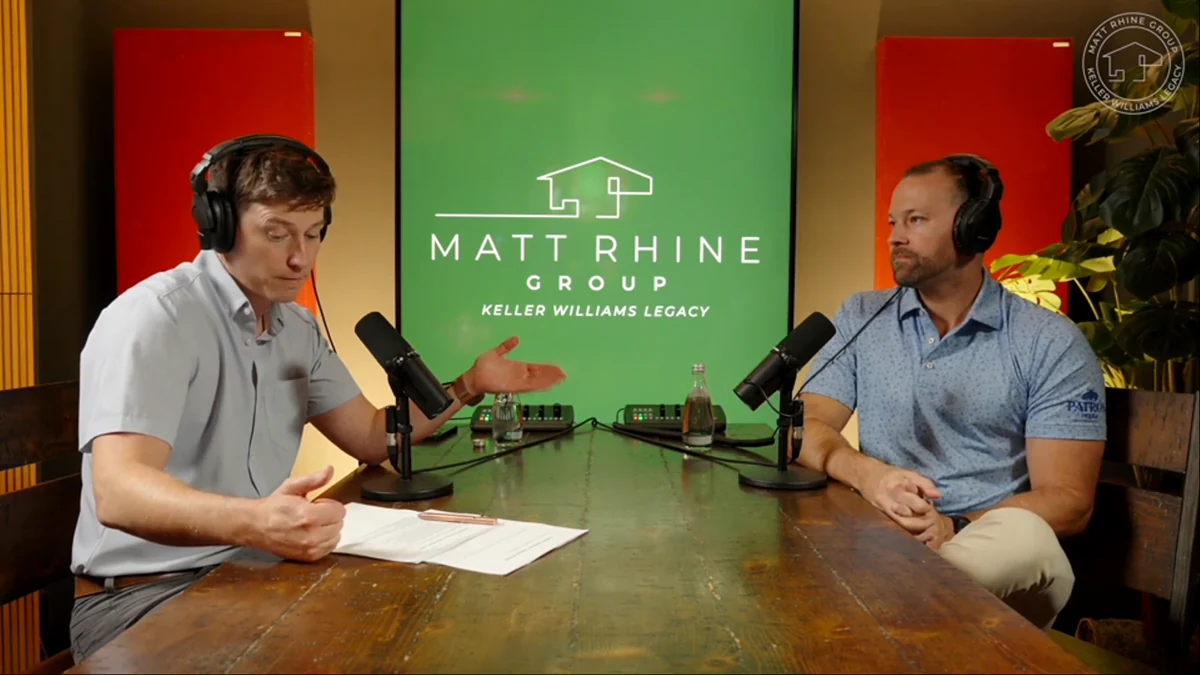
Justin explains how geothermal moves heat and why the house and existing system matter to the decision.
Podcast · Hosted by Matt Rhine
Full Interview · January 26, 2026
High heating bills can make geothermal worth investigating—but the house, the site, and the numbers have to make sense first.
Sales, Ground Loop Heating & Air Conditioning
Video clip
Justin explains how geothermal moves heat and why the house and existing system matter to the decision.
Savings, cost, timing, maintenance, and system-life statements are attributed to the speakers and are not guarantees. Incentive figures in this interview are a September 2025 historical snapshot, not current guidance.
Justin Coleman works in sales at Ground Loop Heating & Air Conditioning, a third-generation family-owned Maryland business specializing in residential and light-commercial geothermal systems.
He joins Matt to make a complicated home upgrade easier to understand: what goes underground, what changes inside, and when the numbers make sense. Matt brings his own older house into the conversation—and gets an answer that is not an automatic yes.
Sources: profile 1 ↗profile 2 ↗
Listen on Apple Podcasts, or follow the show on Spotify.
Before you consider geothermal
Matt's own high-bill home was not an automatic yes. Use a property-specific assessment before treating geothermal as a solution.
Gather a full year of energy bills, identify the fuels and systems involved, and note seasonal peaks before comparing alternatives.
Ask about insulation, air sealing, ducts, distribution, comfort problems, and how many separate systems the home has.
Have a qualified designer assess loop layout, access, underground utilities, yard space, drilling/trenching, permits, and restoration.
Make sure the scope covers equipment, loop field, duct or electrical changes, permits, commissioning, warranties, service, and backup heat.
Compare like-for-like HVAC options under different energy-price, usage, maintenance, financing, and time-in-home assumptions; do not rely on one payback forecast.
Verify current licenses and relevant certifications, references, service capacity, warranties, and who responds if a loop or heat-pump issue arises.
Do not assume a resale premium. Check current incentive rules, dates, program funds, and eligibility with official administrators and a tax professional.
Incentive figures in the interview reflect September 2025, not current offers. Check today's eligibility and rules before including incentives in a project budget.
More conversations
Follow for more conversations with local leaders and the people shaping Maryland.
Interview highlights
Choose a highlight to watch it in the full interview player above.
Justin explains how geothermal moves heat and why the house and existing system matter to the decision.

Vertical drilling, horizontal trenches and what happens to the ground after the work is finished.

Matt and Justin compare comfort, operating savings and the harder question of future resale value.
From the interview
Watch each answer at its matched video timestamp, or read the source transcript.
Justin describes moving heat between the house and the ground: drawing heat from the ground in winter and returning heat to it in summer. He says the ground at depth stays around 50–60°F year-round.
Watch video from 00:04:59 →Read transcript →Justin gives a broad 50–80% energy-cost estimate, then stresses that each house differs and insulation and air sealing matter. Treat his range as an interview estimate, not a promised saving.
Watch video from 00:05:28 →Read transcript →Matt describes his own home's mismatched, unconnected systems and Justin says the project must be viable for that property. The conversation makes suitability—not a blanket savings claim—the first question.
Watch video from 00:06:01 →Read transcript →Justin contrasts vertical drilling with horizontal trenches. His examples are about 160 feet of bore per ton for vertical work and roughly half a football field for a horizontal layout serving the 2,500-square-foot house under discussion; a real design depends on the property.
Watch video from 00:09:07 →Read transcript →Justin describes permitting, drilling, trenching, and indoor work, with the full process taking roughly one and a half to three months in the examples he gives. Scheduling and local permitting vary.
Watch video from 00:11:34 →Read transcript →In this 2025-recorded discussion, Justin gives a $35,000–$55,000 range and about $45,000 as a rough midpoint, depending on system size and loop method. These are historical conversation figures, not a current quote.
Watch video from 00:13:52 →Read transcript →The speakers describe a September 2025 snapshot involving the federal residential clean-energy tax credit, utility and county programs, and Maryland renewable-energy credits. The amounts and eligibility are historical statements from the interview; confirm today's rules directly with official administrators.
Watch video from 00:15:06 →Read transcript →Justin says his company included two visits in the first year in the service arrangement he describes, then compares ongoing checks with conventional HVAC maintenance. Confirm what any current proposal actually includes.
Watch video from 00:27:46 →Read transcript →Justin says insulation and access issues are building challenges, not a geothermal-only problem, and describes keeping existing heat as backup for a particularly difficult old house. A property's design needs an individual assessment.
Watch video from 00:31:56 →Read transcript →No specific premium is established. Matt calls lower bills and a less visible installation possible benefits but says assigning them a dollar value is difficult; neither speaker guarantees a resale increase.
Watch video from 00:42:08 →Read transcript →Work with Matt
Your next move deserves more than a search result. Matt and his Maryland team help you weigh the options, build a plan, and navigate the details from the first conversation through closing.
Narrow your search to Maryland neighborhoods that fit your goals, then get help evaluating homes, shaping offers, and negotiating.
Prepare and price your home for the local market, compare offers, and plan a smoother path to closing.
Home value estimates are not appraisals; exploring an estimate is optional.
Go deeper
Search the timestamped source transcript and return to the interview at the moment that caught your attention.
Podcast-only updates
New-episode emails aren't being sent yet. Join the list for podcast episodes only; no real-estate marketing.